
 By
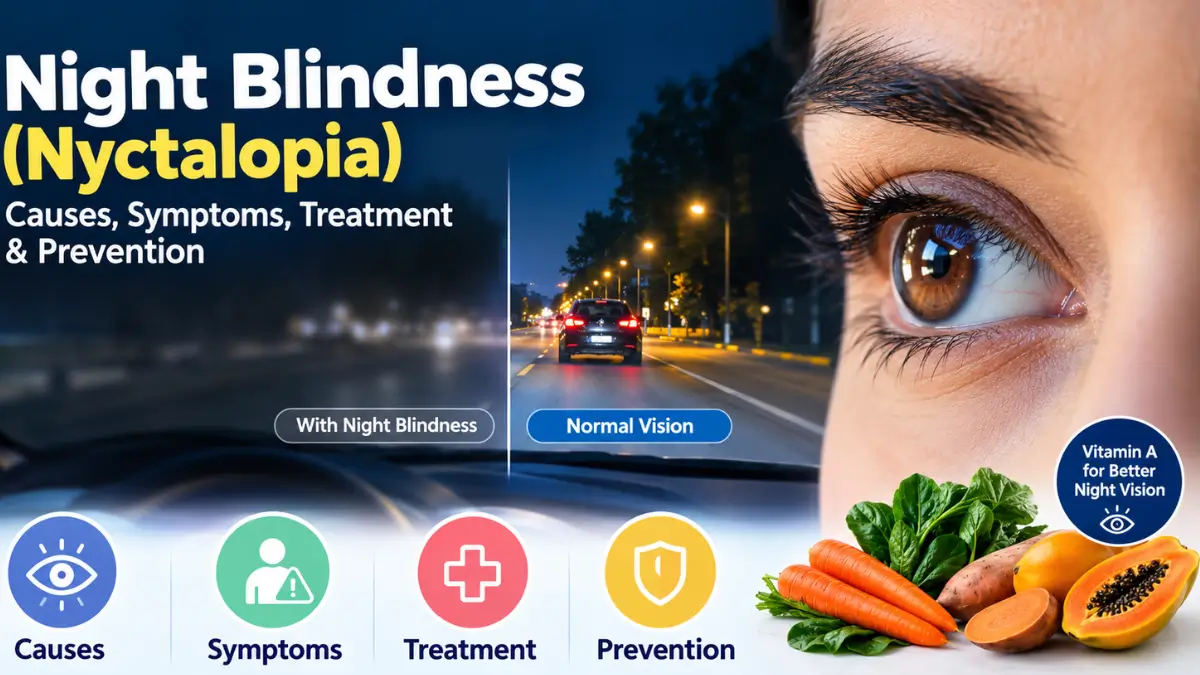
Night blindness (medically known as ‘nyctalopia’) is a condition characterized by difficulty seeing in low-light environments. It significantly hinders daily activities, such as driving at night or navigating safely in dark areas. In reality, this condition is not a disease in itself; rather, it arises from the malfunctioning of the eye’s rod and cone cells and is often a symptom of Vitamin A deficiency. However, in many cases, it is also caused by conditions like cataracts or retinitis pigmentosa. In this blog, we will explore what night blindness is, its causes, symptoms, treatment options, and preventive measures.
What is Night Blindness?
Night blindness (nyctalopia) is a condition in which a person can see clearly in well-lit areas but struggles to see in dark or low-light environments.This problem is primarily associated with the retina and is caused by a Vitamin A deficiency,although it can also result from conditions such as cataracts, glaucoma, or retinal diseases. The condition impairs the eye’s ability to adjust to sudden changes between bright light and darkness and affects retinal function in low-light conditions.
It often signals serious health issues affecting the parts of the retina responsible for vision—specifically the rod cells, which facilitate night vision—though in many cases, it stems from nutritional deficiencies or genetic disorders. While distinct from conditions that impair daytime vision (as night blindness does not affect the ability to see in daylight), those affected often struggle to see clearly in dimly lit rooms, at dusk, or while driving at night.
Cause of Night Blindness
The retina located at the back of the eyes contains special cells called rods. These cells help us see in low light. When the functioning of these cells is affected, the problem of night blindness arises. But there are other reasons due to which the problem of night blindness occurs and the ability to see in the dark reduces.
Vitamin A Deficiency
A deficiency in Vitamin A reduces the production of rhodopsin, significantly increasing the risk of night blindness. This vitamin is essential for producing the rhodopsin pigment, which helps the eyes adapt to low-light conditions.
Retinitis Pigmentosa
This is a rare genetic disorder that gradually damages the retina, particularly the rod cells that aid in night vision. As the condition progresses, night vision deteriorates further, and eventually, peripheral vision is also lost.
Cataracts
A cataract clouds the eye’s natural lens, reducing the amount of light that reaches the retina. Although cataracts are often age-related, they are more likely to occur in older adults than in children or young people. The condition can impair the ability to see in low-light environments, leading to difficulty seeing clearly at night.
Glaucoma
Glaucoma commonly referred to as ‘black cataract’damages the optic nerve, affecting vision and potentially leading to blindness if not treated in time. Initially, it affects peripheral vision and the ability to see in low light. Additionally, ‘night blindness’ can occur as a side effect of the medications used to treat glaucoma.
Refractive Errors
Common refractive errors such as nearsightedness (myopia) and astigmatism can cause night blindness. This occurs because the eyes have difficulty focusing properly.
Genetic conditions
Genetic conditions, such as congenital night blindness. Some people are born with structural abnormalities in the retina or other parts of the eye, which reduce their ability to see at night.
Age-related Changes
Aging naturally reduces the eyes’ ability to adjust to low-light conditions. While not always pathological, this can exacerbate symptoms in individuals with underlying eye diseases.
Symptoms of Night Blindness
Night blindness primarily affects the ability to see in low-light environments, making it difficult for the eyes to adjust to dim light and hindering the clear recognition of objects or details in the dark. While symptoms may vary depending on the underlying cause, the condition interferes with daily activities:
- One of the primary areas affected is driving, as individuals with night blindness have reduced visual acuity needed for safe navigation in dark environments.
- Complete loss of vision when entering a dark room that lasts for more than a few minutes.
- Having difficulty seeing near or far objects and faces in low light.
- Frequently stumbling or bumping into objects due to difficulty recognizing objects in poorly lit areas.
- Struggling to adjust vision when moving from a brightly lit area to a dimly lit area, due to which vision becomes very poor.
- Sensitivity to light (photophobia)
- Inability to see stars at night
Additionally, bright LED headlights can make the condition worse, as the intense glare of these lights can be particularly overwhelming. If you notice these symptoms, consult an eye care specialist.
Risk factors of Night Blindness
- Vitamin A Deficiency: Actually, Vitamin A is very important for the production of a pigment called Rhodopsin in our retina, which is responsible for seeing in low light. But due to its deficiency in the body, rod cells are not able to function properly, due to which the risk of night blindness increases the most.
- Poor Nutrition: Due to not taking a balanced diet, the body does not get the necessary vitamins and minerals. Especially deficiency of nutrients like Zinc and Vitamin A which directly affects eyesight and night vision.
- Diabetes: Due to high blood sugar level for a long time, the blood vessels of the retina get damaged, which is called diabetic retinopathy. Whereas this condition gradually seriously affects the ability to see at night and also becomes the main cause of night blindness.
- Family History of Retinal Diseases: Some genetic disorders are passed down from generation to generation. If someone in your family has had this problem, the risk of night blindness in the next generation increases significantly.
- High Myopia: People who have very high number of spectacles (high myopia), the size of the pupil of their eyes becomes larger or longer than normal. Due to this, the retina gets stretched and becomes thin and due to the weakening of the retina, there is difficulty in focusing and seeing clearly at night.
- Increasing Age: As we age, natural changes occur in the internal structure of the eyes, which is a normal thing. For this reason, cataract occurs in elderly people with increasing age, which clouds the lens of the eye. Due to this, not enough light reaches the eye at night, due to which night vision becomes weak.
Complications of Night Blindness
Actually, night blindness (Nyctalopia) is not limited only to poor vision at night. Because if its root cause is not identified and treated on time, it can give rise to many serious and dangerous problems in daily life:
- Night Driving Accidents: Driving at night is the biggest risk for a person suffering from night blindness. Because in low light, sudden obstacles, potholes on the road or people walking are not clearly visible. Additionally, it takes a long time for the eyes to adjust back to darkness after the bright lights of oncoming vehicles, which can lead to serious road accidents.
- Frequent Falls and Injuries: In poorly lit areas indoors or outdoors (such as stairs, halls or unlit streets), estimation is difficult. For this reason, people suffering from night blindness often start hitting things, their feet may slip and they may even fall down the stairs, due to which there is a risk of fracture and serious head injury.
- Reduced Independence: In fact, as this problem increases, the person becomes afraid to go out of the house at night or after dusk, while he has to depend on others for his daily needs, social events or even in emergency situations. For this reason, this dependence gradually reduces the self-confidence of the person and can affect him mentally.
- Progression of Underlying Eye Disease: As we know, night blindness is not a disease in itself but a symptom. If it is ignored, the underlying disease (such as glaucoma, diabetic retinopathy, or retinitis pigmentosa) continues to progress and if not treated timely, these diseases can eventually lead to permanent blindness.
Prevention of Night Blindness
The best way to prevent night blindness is to take action before it starts. If you pay attention to proper nutrition and proper eye care, this problem can be avoided to a great extent.
The main measures to prevent this and a list of foods rich in Vitamin A are given, which will help in maintaining your eyesight:
- Vitamin A Rich Diet: To keep the retina of the eyes healthy, it is most important to have adequate amount of Vitamin A in the diet. This vitamin maintains the rhodopsin pigment of the eyes, which is necessary for seeing in low light.
- Regular Eye Examinations: Get a detailed eye examination done by an eye specialist (Optometrist or Ophthalmologist) at least once a year. Because regular checkups can detect early symptoms of retina diseases and cataracts in time, due to which serious conditions can be avoided.
- Diabetes Control: If you have diabetes, always keep your blood sugar level under control. Because uncontrolled sugar increases the risk of diabetic retinopathy, which directly affects night vision. Therefore, keep it under control with proper diet, exercise and medicines.
- UV Protection Sunglasses: When going out in the sun, use sunglasses that block UV rays. In fact, the harmful ultraviolet rays of the sun can damage the retina and accelerate the process of cataract.
- Early Treatment of Cataract and Glaucoma: If you have blurred vision or complain of glaucoma and cataract, do not postpone its treatment. In fact, timely operation of cataract and use of right eye drops for glaucoma prevents night blindness from increasing.
Foods Rich in Vitamin A
For eye health and prevention of night blindness, include the following food items in your daily diet. Beta-carotene and preformed vitamin A are found in abundance in these.
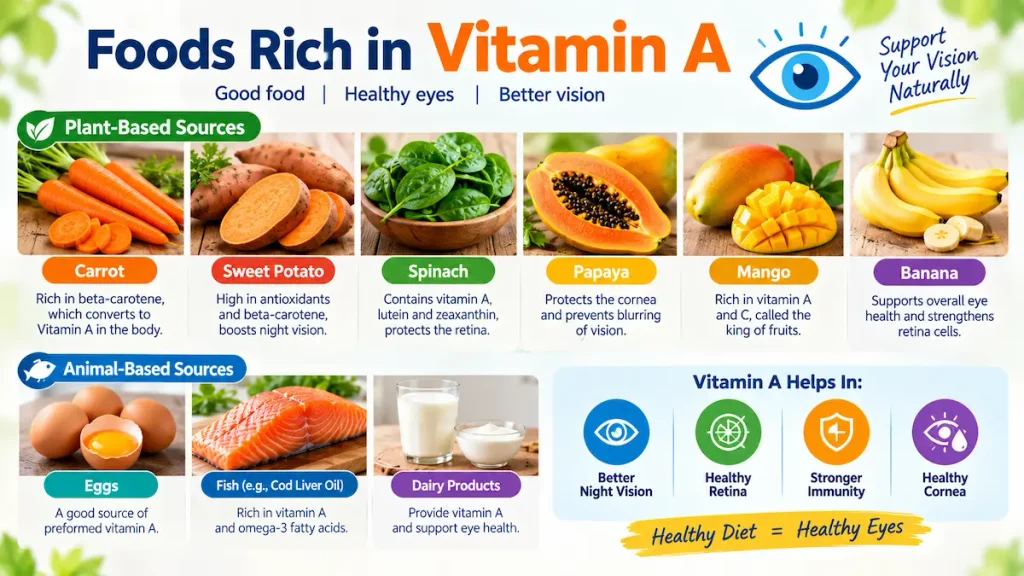
Plant-Based Sources
- Carrot: It is the best and richest source of beta-carotene, which our body converts into Vitamin A.
- Sweet Potato: It contains high amounts of antioxidants and beta-carotene, which improves night vision and keeps the eyes healthy.
- Spinach: This green leafy vegetable contains vitamin A as well as lutein and zeaxanthin, which protect the retina.
- Papaya: Regular consumption of papaya protects the cornea of the eyes and prevents blurring of vision and also keeps the body healthy.
- Mango: Among fruits, mango is a tasty and rich source of both Vitamin A and C, hence it is called the king of fruits.
- Banana: It is a superfood known to improve the overall health of the eyes and retina cells and strengthen the body.
Night blindness diagnosis
Diagnosis of night blindness involves a complete eye examination by an ophthalmologist. The process begins with a detailed medical history, family history, vision problems, symptoms, and any underlying conditions. This is followed by a complete eye examination that assesses the patient’s ability to see in low light. One of the primary tests used to diagnose night blindness is a visual acuity test, which measures the sharpness of vision in different light conditions. Pupil reaction tests, Fundus tests, which closely examine the retina to detect any signs of damage or disease.
If the eyes have an underlying condition such as cataracts or glaucoma, retinitis pigmentosa, macular degeneration, diabetic retinopathy, additional tests may be needed, including tonometry to measure eye pressure or imaging tests to check the retina.
Treatment of Night Blindness
Night blindness (nyctalopia) is not a disease itself but a symptom of an underlying eye problem. Therefore its treatment depends on the underlying cause and taking precautions to reduce certain risks may be helpful.
- Vitamin A supplements: When the cause is vitamin A deficiency, treatment includes vitamin A supplements and a diet rich in vitamin A. Eggs, fortified cereals, fortified milk, vegetables and fruits, cod liver oil, dark, leafy green vegetables help cure night blindness.
- Cataracts: Treatment of night blindness caused by cataracts involves removing the cataract and replacing it with an artificial lens. This procedure is one of the most common and effective treatments for cataract-related night blindness. It improves your vision not only for your daily activities but also for night-time activities.
- Corrective lenses: For night blindness related to nearsightedness, prescription eyeglasses or contact lenses can improve vision in low light. Treatment may include wearing specific types of glasses, which can help maintain better vision.
- Retinitis pigmentosa: In some cases, cure for night blindness may not be possible. There is currently no effective treatment for retinitis pigmentosa, although gene therapy, retinal implants, low vision assistive devices, and medical services can improve symptoms and quality of life.
- Glaucoma: If glaucoma is the cause of your night blindness, medicated eye drops, laser therapy, or surgery can help maintain vision and control the symptoms of night blindness and give you relief from night blindness.
- Diabetic retinopathy: If you have diabetes and also have night blindness, controlling blood sugar and treating diabetic retinopathy with laser treatment or injections can improve vision and relieve night blindness.
Frequently Asked Questions (FAQs)
Is night blindness a permanent condition?
Not usually. If caught early and treated (like cataract surgery or Vitamin A supplements), it is fully reversible. However, cases like retinitis pigmentosa have no cure yet.
Can wearing glasses help night blindness?
Yes. For refractive errors, anti-reflective glasses significantly reduce glare and improve low-light vision.
Which vitamin deficiency causes night blindness?
Vitamin A deficiency is the primary nutritional cause of night blindness. It reduces the production of rhodopsin in the retina.
Can night blindness be cured without surgery?
Yes. If caused by Vitamin A deficiency, it can be cured with diet and supplements. If caused by refractive errors, glasses fix it. Only cataracts require surgery.
When should I see a doctor for night blindness?
If you notice sudden changes in your night vision, or if you find it difficult to drive after dark, schedule an eye exam immediately.
Reference
- Healthline – Night blindness, Causes, Symptoms & Treatment
- National Institutes of Health – Night blindness treatment & prevention
- Medical News Today – Night blindness : Main Causes, Symptoms & Treatment
- American Academy of Ophthalmology – Night Vision problem
- Cleveland Clinic – Night Blindness (Nyctalopia) What It Is, Causes & Treatment